
Guides & Resources
Power Bills Set to Fall Across Australia: What Small Business Owners Should Do With Potential Energy Savings in 2026
Power prices are set to fall across parts of Australia.
Learn what it could mean for cash flow and business planning in 2026.
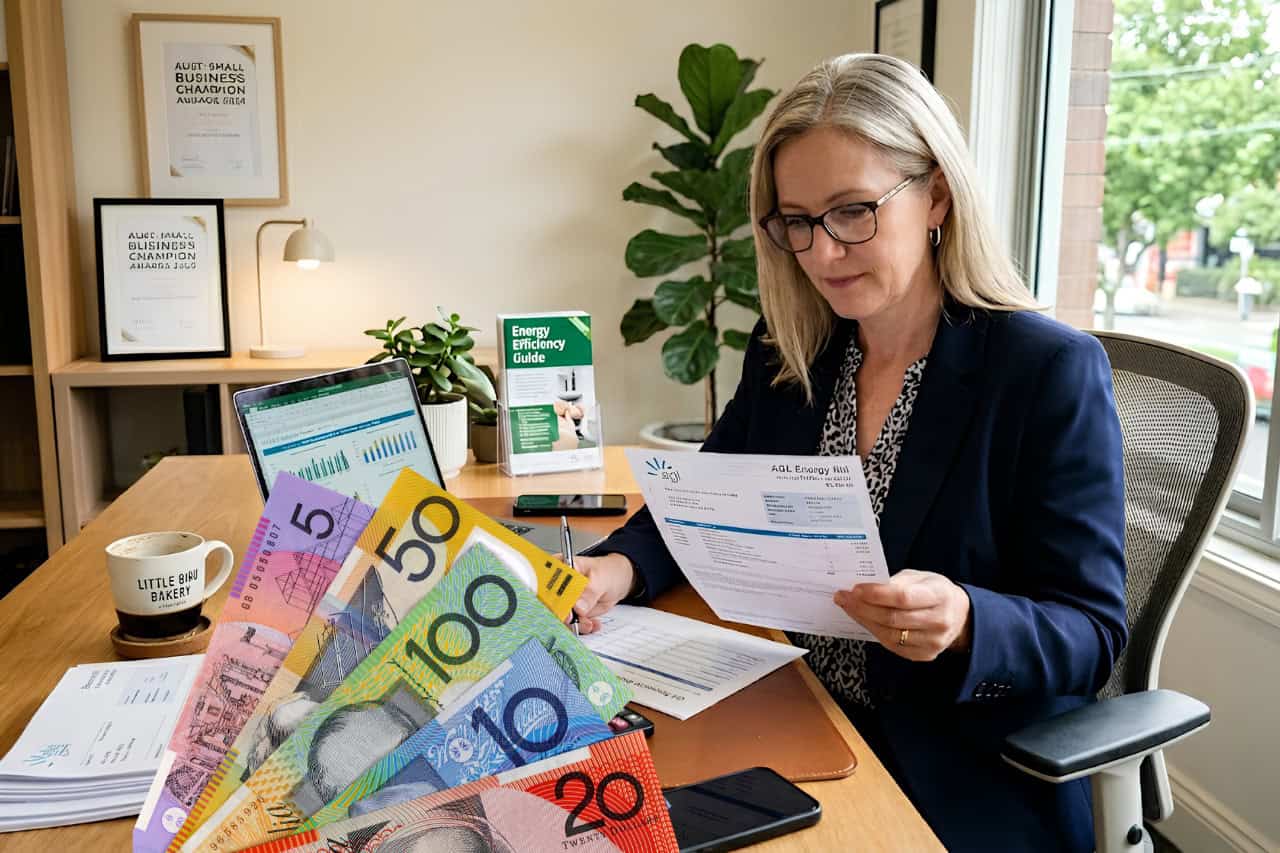

After years of rising costs, inflation pressure, and growing operating expenses, some Australian households and businesses may finally receive welcome relief on energy bills.
Recent announcements surrounding Australia’s Default Market Offer (DMO) indicate electricity prices may decrease across parts of the east coast, with reductions applying across areas of New South Wales, South East Queensland, and some business customers in South Australia.
For many Australians, cheaper power simply means lower household expenses. But for small business owners, this news could have broader implications.
Reduced operating costs can create opportunities to improve cash flow, revisit budgets, strengthen business resilience, or redirect funds toward growth initiatives.
While the savings will differ depending on location, electricity usage, tariff structure, and provider arrangements, business owners should understand what is changing — and consider how small cost reductions can influence bigger financial decisions.
What Happened?
Australia’s energy pricing system uses a benchmark known as the Default Market Offer (DMO).
The DMO acts as a reference point that helps consumers compare energy plans and sets maximum prices for standing offers in specific regions.
Recent updates from the Australian Energy Regulator (AER) indicate:
Household changes
New South Wales:
- reductions between approximately 3.4% and 5.0%
South East Queensland:
- reductions around 7.2%
South Australia:
- a modest increase for some residential customers
Small business changes
Some of the strongest reductions appear to apply to small businesses.
Reported decreases include:
South Australia:
- approximately 20.9% reductions for some small business customers
South East Queensland:
- around 14% reductions
New South Wales:
- reductions ranging between roughly 9.4% and 20.9%
Reports suggest some businesses could save more than $1,000 annually, depending on energy use and tariff arrangements.
Importantly, these figures reflect benchmark pricing and do not automatically mean every business will experience identical outcomes.
Individual pricing may vary based on:
- retailer agreements
- contract terms
- location
- smart meter arrangements
- energy usage patterns
- tariff structures

Why Does This Matter?
Business owners understand that rising costs rarely happen in isolation.
In recent years, businesses have managed:
- inflation pressures
- payroll increases
- rising superannuation costs
- higher insurance premiums
- rent increases
- supply chain costs
- financing pressures
Energy expenses have become another major operating cost for many industries.
Businesses such as:
- cafés
- restaurants
- retail stores
- warehouses
- manufacturers
- medical practices
- gyms
- salons
- trades businesses
often carry significant electricity costs.
Small reductions across recurring expenses can create meaningful improvements over time.
Even modest savings may improve:
- business cash flow
- budgeting flexibility
- profitability
- debt management
- emergency reserves
- investment capacity
Lower expenses do not automatically transform business performance overnight.
However, they can create breathing room during uncertain economic periods.
Why Small Business Owners Should Pay Attention
Business owners frequently focus on revenue growth.
But profitability often improves faster through better cost management.
Lower utility expenses can affect several financial areas.
Cash flow forecasting
Cash flow forecasting relies heavily on assumptions.
If energy expenses decline, projections may change.
This may influence:
- monthly budgeting
- seasonal forecasts
- hiring decisions
- capital expenditure planning
- debt servicing capacity
Margin improvements
For businesses operating with narrow margins, cost reductions matter.
Industries with heavy energy consumption may see stronger impacts.
Examples include:
Food businesses
Commercial kitchens rely heavily on refrigeration, cooking equipment, and climate control.
Manufacturing operations
Equipment and machinery often create substantial energy demand.
Health and fitness businesses
Extended operating hours can increase utility costs.
Retail and hospitality
Air conditioning, lighting, and refrigeration contribute heavily to expenses.
Growth planning opportunities
Small cost savings can create opportunities elsewhere.
Businesses may redirect funds toward:
- marketing initiatives
- technology upgrades
- staff development
- debt reduction
- cash reserves
- equipment investment
State Differences Matter
Not all business owners across Australia will experience identical outcomes.
The DMO generally applies within:
- New South Wales
- South East Queensland
- South Australia
Victoria uses a separate pricing benchmark through the Victorian Default Offer system.
Other states and territories operate under different regulatory arrangements.
Business owners should avoid assuming national outcomes apply equally across all locations.
If your business operates across multiple states, energy pricing changes may affect sites differently.
What Are the Tax and Accounting Implications?
Electricity savings may appear straightforward.
However, business owners should still consider the broader financial impact.
Expense forecasting
Historical utility assumptions may no longer reflect future costs.
Budget reviews may become necessary.
Businesses should revisit:
- annual expense forecasts
- operating budgets
- break-even calculations
- profitability targets
BAS and GST reporting
Electricity costs generally form part of deductible operating expenses.
Reduced expenses may slightly alter:
- GST credits
- expense ratios
- reporting assumptions
Changes may be minor, but can still affect broader financial reporting.
Cash flow planning
Unexpected savings often disappear without a plan.
Additional cash flow may be directed toward:
- tax reserve accounts
- super obligations
- debt repayments
- emergency cash buffers
Equipment investment opportunities
Lower operating expenses may provide flexibility for energy-efficient upgrades.
Examples may include:
- solar installation assessments
- efficient lighting systems
- upgraded equipment
- smart energy systems
Businesses should seek advice regarding depreciation treatment and instant asset deduction eligibility where relevant.
Who Should Pay Attention?
Several groups should monitor these developments.
Small business owners
Businesses with higher operating costs may see meaningful improvements.
Hospitality operators
Restaurants and cafés often experience substantial electricity usage.
Retail businesses
Long operating hours and cooling requirements increase costs.
Medical and health practices
Equipment and climate control can create large utility expenses.
Trades businesses
Workshops and warehouses frequently consume significant energy.
Multi-location businesses
State-specific outcomes may create varying impacts.
What Should Business Owners Do Now?
Headlines often encourage immediate reactions.
Instead, focus on practical actions.
Review current electricity arrangements
Do not assume your existing provider remains competitive.
Compare:
- standing offers
- market offers
- usage patterns
- contract periods
Review business budgets
Update operating assumptions if reductions apply.
Small adjustments improve financial forecasting accuracy.
Revisit cash flow forecasts
Forecasting should reflect current conditions.
Many businesses continue relying on assumptions created during periods of high inflation.
Consider future investments carefully
Savings can create opportunities.
However, avoid spending simply because costs decline temporarily.
Monitor future updates
Energy pricing remains influenced by:
- wholesale markets
- regulation
- infrastructure changes
- geopolitical events
- supply conditions
Future movements may differ.
Common Mistakes to Avoid
Assuming every business receives identical savings
Energy outcomes vary significantly.
Ignoring state differences
Regulatory arrangements differ across Australia.
Treating savings as permanent
Energy markets can shift quickly.
Forgetting contract reviews
Existing energy contracts may not automatically update.
Spending before savings materialise
Projected savings differ from realised savings.
Review actual figures before making decisions.

Frequently Asked Questions
1. Are electricity prices falling across all of Australia?
No. Pricing changes differ by region and regulatory framework.
2. Do all businesses automatically receive lower bills?
Not necessarily. Outcomes depend on provider arrangements and contract structures.
3. What is the Default Market Offer?
The DMO acts as a benchmark for comparing electricity plans and setting pricing limits for standing offers.
4. Which states are affected?
The latest updates mainly apply to NSW, South East Queensland, and South Australia.
5. Does Victoria follow the same system?
No. Victoria operates under a separate default pricing structure.
6. Could energy prices rise again later?
Yes. Energy pricing can change due to market conditions and external events.
7. Should businesses switch providers immediately?
Not automatically. Compare offers carefully before changing arrangements.
8. Are electricity expenses tax-deductible?
Business electricity expenses are generally deductible when used for business purposes.
9. Should businesses revise budgets now?
Reviewing budgets may help improve forecasting accuracy.
10. Can lower operating costs improve borrowing outcomes?
Potentially. Improved profitability and stronger cash flow may support lending assessments.
Final Thoughts
After several years of cost pressures, lower electricity pricing may provide welcome relief for some Australian households and businesses.
While the headlines focus on bill reductions, the bigger opportunity for business owners may be strategic.
Small savings can create larger opportunities when incorporated into budgeting, cash flow planning, and long-term business decision-making.
Avoid making assumptions based solely on headlines.
Understanding how changing costs affect your business position remains important.

Need Help Understanding What These Changes Could Mean For Your Business?
If you are unsure how this update affects your business, tax position, or cash flow, speak with Latitude Accountants.
Our team can help you understand your options, stay compliant, and make better business decisions with confidence.
📍 Sydney Olympic Park | Marrickville | Melbourne | Loxton
📞 1300 706 597
📧 info@latitudeaccountants.com.au
Disclaimer
This article is intended for general information purposes only and does not constitute financial, tax, or legal advice. Information is based on publicly available reporting and regulatory announcements available at the time of writing. Energy pricing outcomes may differ depending on state, retailer, and individual circumstances. Seek professional advice before making business decisions.
Free Consultation
Got questions after reading this?
Book a call with our team. We'll walk through your situation and help you understand your options — no obligation.
Book Your Free Consultation*Free for all ABN holders · Limited spots available
Call 1300 706 597What We Do
Chartered accountants who work proactively
Not just at tax time — all year round.
Before You Make a Move
Six times you should call us first
Most costly mistakes happen before the paperwork is signed.
Buying a vehicle
Structure, FBT, and depreciation all need to be right before you sign.
Taking money out
Wages, dividends, or drawings each carry different tax consequences.
Buying property
Who buys it changes your GST, land tax, and CGT position entirely.
Hiring your first employee
Payroll, super, and STP obligations kick in from day one.
Buying or selling a business
You can inherit someone else's tax debt. Know what you're buying first.
Taking on a partner
Equity splits need proper structure upfront. A handshake deal costs more to unwind.
Get In Touch
Stop Guessing. Start Making Better Decisions.
Get clarity on your numbers, your structure, and your next move. Speak directly with our team and walk away knowing exactly where you stand.