
Guides & Resources
Building a High-Performance Business: Lessons from High Performance Health
Learn how Emil Josef built High Performance Health
From a solo practice to a thriving clinic. Insights on scaling teams, diversification, and NDIS challenges.
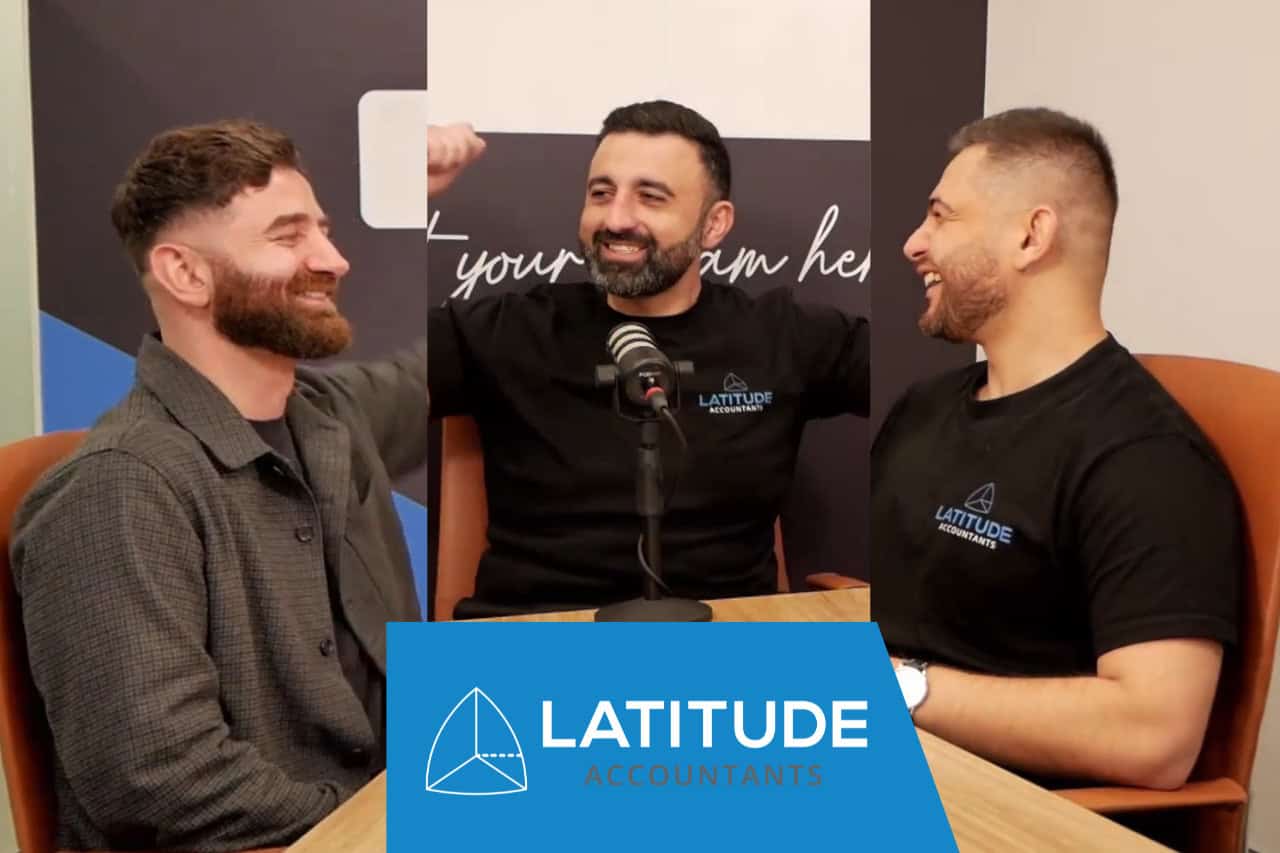

At Latitude Accountants, we are passionate about more than just numbers. We are passionate about the people behind the businesses we advise. In this episode of the Lat Chat podcast, our co-founder, John Saade, sat down with Emil Josef, the founder of High Performance Health, to discuss his incredible journey from a sole trader to managing a team of twenty health professionals.
Emil’s story is a masterclass in resilience, diversification, and putting people first—principles that apply whether you are running a health clinic or a local trade business.
From Sole Trader to Scaling a Team
Every business owner knows that the jump from being a “one-man show” to managing a team is one of the toughest transitions you can make. Emil started as a sole trader working in medical centres after graduating, driven by a need to set his own hours due to health issues.
However, his journey wasn’t a straight line. He faced:
- Property setbacks: A gym lease in St. Mary’s that ended when the roof nearly caved in.
- Global disruptions: Opening his first dedicated clinic just before Christmas in 2020—right in the middle of the COVID-19 pandemic.
- Resource shortages: A year and a half where the clinic’s gym stayed half-empty because they simply couldn’t source equipment.
Despite these hurdles, High Performance Health grew because Emil was willing to “get his hands dirty” and step out of his comfort zone. For small business owners, this is a vital lesson: growth often happens in the moments when you are most uncomfortable.

Navigating the Australian Health Landscape: NDIS and Medicare
One of the most complex areas for any health-related business in Australia is navigating government funding schemes. Emil shared his raw insights into the National Disability Insurance Scheme (NDIS).
While the NDIS has created many jobs and provided much-needed support for many, Emil highlighted a significant “consistency” issue. Many NDIS planners are not health professionals, which can lead to discrepancies where some participants are overlooked while others receive substantial funding without a proper health assessment.
Key Differences in Australian Health Roles
Understanding who does what is crucial for both business owners and patients:
- Exercise Physiologist (EP): Focuses on movement-based interventions and lifestyle changes for chronic conditions. They do not diagnose but use exercise as medicine.
- Physiotherapist: More “hands-on,” providing diagnosis, massage, and pain management.
- Chiropractor: Often focuses on adjustments and manipulations, which Emil notes is a more “passive” form of treatment compared to the “active” approach of an EP.
Diversification: The Secret to Business Longevity
A major takeaway from the podcast was the importance of diversification. When COVID-19 hit, medical centres became “tele-health” hubs, which made it nearly impossible for hands-on practitioners like physiotherapists and exercise physiologists to operate effectively.
Emil responded by diversifying his team to include psychologists, occupational therapists, and Allied Health assistants. This holistic approach allows the clinic to create comprehensive plans for clients, particularly those under NDIS funding.
From an accounting perspective, diversification is your best defence against economic “ripple effects”. When one stream of income slows down—such as private patients reducing their spending during a cost-of-living crisis—having other streams (like government-funded contracts) can keep the business stable.
The “People First” Approach to Profit
It might sound counterintuitive to a traditional accountant, but Emil argues that putting money last is what actually leads to success. High Performance Health provides over $100,000 worth of free services to the local community annually.
This isn’t just charity; it’s about building a brand based on trust and results. Emil believes that if you hire people who genuinely care when a patient doesn’t improve, the business growth will follow naturally. At Latitude Accountants, we see this every day: the most successful small businesses are the ones that lead with empathy and a desire to solve their clients’ problems.

Frequently Asked Questions
What is the difference between an Exercise Physiologist and a Physio?
An Exercise Physiologist uses movement-based interventions for chronic conditions, while a Physiotherapist is more hands-on, providing diagnosis and immediate pain management.
How does the NDIS impact health service providers?
The NDIS provides funding for participants, but providers must navigate inconsistent planning processes. Many planners are not health professionals, leading to discrepancies in how funding is allocated for health assessments.
Why is diversification important for a small business?
Diversification protects you from economic shifts. For example, if private patient numbers drop during a recession, having government-funded services (like NDIS or Medicare) ensures your business remains viable.
What is the “active” treatment approach mentioned in the podcast?
Active treatment involves teaching the patient how to manage their own health through exercise and education, rather than relying solely on passive treatments like massage or adjustments.

Ready to Scale Your Business?
Running a business is like training for high performance—it requires a strategy, the right team, and a deep understanding of the “numbers” that drive your success. Whether you are navigating the complexities of the NDIS or looking to expand your team from a sole trader to a company structure, we can help.
Contact the expert team at Latitude Accountants today for strategic accounting and business advice tailored to your specific situation. Let’s help you build a business that performs at its peak.
- Phone: 1300706597
- Email: info@latitudeaccountants.com.au
- Book online via our website.
- Sydney Olympic Park | Marrickville | Melbourne | Loxton
Disclaimer
The information provided in this blog post is general in nature and does not constitute personal financial or tax advice. Laws and policies, such as Payroll Tax or Stamp Duty, vary across Australian states and territories. Readers should seek professional advice regarding their specific circumstances.
Free Consultation
Got questions after reading this?
Book a call with our team. We'll walk through your situation and help you understand your options — no obligation.
Book Your Free Consultation*Free for all ABN holders · Limited spots available
Call 1300 706 597What We Do
Chartered accountants who work proactively
Not just at tax time — all year round.
Before You Make a Move
Six times you should call us first
Most costly mistakes happen before the paperwork is signed.
Buying a vehicle
Structure, FBT, and depreciation all need to be right before you sign.
Taking money out
Wages, dividends, or drawings each carry different tax consequences.
Buying property
Who buys it changes your GST, land tax, and CGT position entirely.
Hiring your first employee
Payroll, super, and STP obligations kick in from day one.
Buying or selling a business
You can inherit someone else's tax debt. Know what you're buying first.
Taking on a partner
Equity splits need proper structure upfront. A handshake deal costs more to unwind.
Get In Touch
Stop Guessing. Start Making Better Decisions.
Get clarity on your numbers, your structure, and your next move. Speak directly with our team and walk away knowing exactly where you stand.