
Guides & Resources
Bathla Group Collapse: What Happened and What It Means for Property Buyers and Businesses
Bathla Group has entered voluntary administration with billions in liabilities.
Here’s what the collapse means for buyers, businesses and contractors.


The Bathla Group collapse has sent shockwaves through Australia’s property and construction sectors, leaving homebuyers, contractors, suppliers, employees and private lenders facing significant uncertainty.
On 25 August 2026, Bathla Group entered voluntary administration, with restructuring firm Teneo appointed to oversee key entities including Universal Property Group and Raj & Jai Construction. Universal Property Group reported approximately $3.2 billion in liabilities as at June 2025, while other reporting has put the broader group’s debt exposure at more than $3 billion.
The scale of the situation is significant. Thousands of homes and developments are connected to the group, including around 2,000 homes reportedly under construction. Administrators have also said urgent funding is needed to help keep construction activity going while the group’s future is assessed.
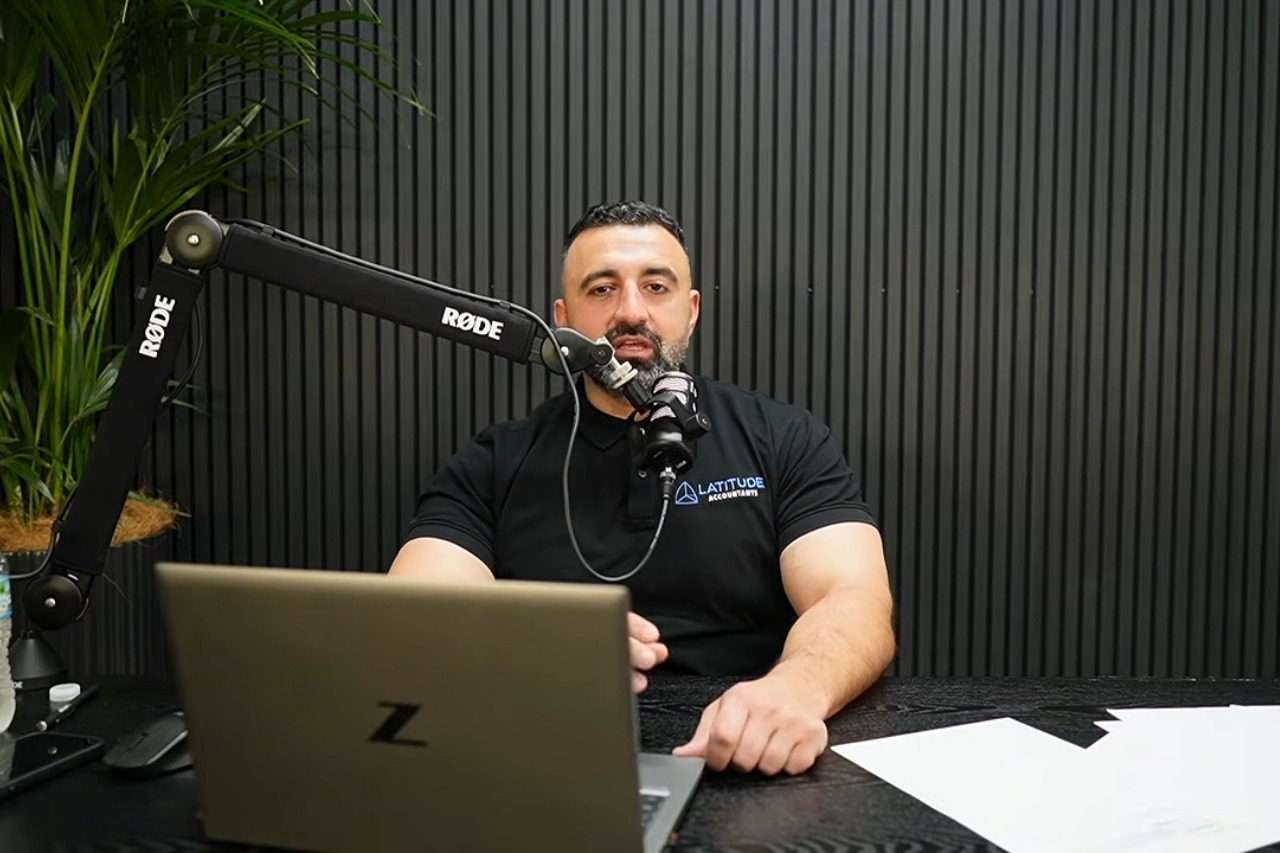
For John Saade, CEO of Latitude Accountants, the situation also highlights a broader business lesson: major companies do not generally reach this point because of one isolated problem. Debt, cash flow, pricing, funding structures, contracts, growth decisions and changing market conditions can combine to create serious financial pressure.
What Happened to Bathla Group?
Bathla Group was a major residential developer and builder, particularly active across Western Sydney and other parts of Australia.
The company has attributed its financial difficulties to what it described as a “perfect storm”, including:
- Softer property sales
- Rising construction costs
- Changes to tax and housing policy
- Weaker market confidence
- Increasing financial pressure
However, the administration process is now focused on understanding the group’s financial position and determining whether projects can continue.
Teneo has stated that its priority is to stabilise the business, maintain construction and property settlements where possible, and minimise disruption to employees, customers and contractors.
This distinction matters. Voluntary administration does not automatically mean every Bathla project will stop permanently or that every company within the wider group will be liquidated. Administrators still need to assess the businesses, assets, liabilities, projects and available funding before determining the best path forward.
Why Does the Bathla Collapse Matter?
The immediate concern is not simply the size of Bathla’s debt. It is the number of people and businesses connected to its projects.
A large construction business operates through an extensive network of:
- Homebuyers
- Developers
- Builders
- Subcontractors
- Suppliers
- Employees
- Private lenders
- Professional advisers
- Property agents
When a major participant experiences financial distress, problems can spread throughout that network.
For example, a subcontractor may complete work and be waiting for payment. If the developer cannot pay, that subcontractor may suddenly have a cash-flow problem of its own. If the subcontractor has employees, suppliers and loan repayments to meet, the original problem can quickly become a much larger financial issue.
This is why the collapse of a major construction business can have consequences well beyond the company itself.
What Does the Collapse Mean for Property Buyers?
For people who have purchased a Bathla property, the biggest question is understandably simple:
Will my home be completed?
The answer may vary between individual projects.
Administrators need to assess each development, its funding arrangements, construction status, contracts and financial position. Some projects may be able to continue, while others could face delays, restructuring or changes to their arrangements.
Homebuyers should avoid assuming that every project will receive the same outcome.
If you are affected, it is important to:
- Keep copies of your purchase contract and correspondence.
- Confirm the current status of your development.
- Monitor communications from the administrators and relevant parties.
- Obtain independent legal advice about your specific contract.
- Keep records of deposits, payments and other expenses.
- Avoid making major financial decisions based solely on speculation or social media commentary.
The situation remains developing, and buyers should rely on formal information relating to their specific project.
Why Private Credit Matters in the Bathla Story
One of the most important features of the Bathla situation is the role of private credit.
Unlike traditional bank lending, private credit involves non-bank lenders providing loans directly or through private credit funds. Bathla’s financial structure reportedly involved a substantial amount of private lending, making the collapse an important test for Australia’s growing private credit market.
For businesses, the lesson is broader than simply choosing between a bank and a private lender.
Business owners need to understand:
- How much they are borrowing
- What the borrowing actually costs
- When repayments are due
- What security has been provided
- What happens if revenue falls
- What happens if construction or operating costs increase
- Whether the business can survive a period of weaker sales
Cheap or easily available funding can support growth, but debt does not remove financial risk — it can magnify it.
The Importance of Cash Flow and Financial Planning
The Bathla situation is also a reminder that revenue and growth do not necessarily mean a business is financially healthy.
A business can have:
- Large projects
- Significant assets
- Strong revenue
- A substantial pipeline
- Numerous customers
and still experience a liquidity crisis if cash cannot arrive quickly enough to meet its obligations.
This is particularly important in construction, where businesses may need to pay workers, suppliers and contractors well before projects generate their final revenue.
Business owners should regularly understand their:
Cash Flow Position
Knowing how much cash is available today is only part of the picture. Businesses also need to understand expected inflows and outflows over the coming weeks and months.
Debt Commitments
Loan repayments, interest costs and other financing obligations need to be tested against realistic revenue expectations.
Project Profitability
A large project is not necessarily a profitable project. Pricing needs to account for labour, materials, financing, overheads, delays and unexpected cost increases.
Financial Resilience
Businesses should consider what would happen if sales declined, customers paid late, costs increased, or funding became harder to obtain.
What Can Other Businesses Learn From Bathla?
The Bathla story should not be viewed simply as a property-market story.
It is also a business-management lesson.
John Saade’s broader point in the CEO Breakdown episode is that external conditions can contribute to financial pressure, but business owners also need to examine the decisions made within the business.
Important warning signs can include:
- Taking on debt faster than the business can support
- Growing too aggressively
- Underpricing work
- Accepting contracts with insufficient margins
- Relying too heavily on continued sales growth
- Failing to monitor cash flow
- Depending on one source of funding
- Expanding without adequate financial forecasting
- Ignoring early signs of financial distress
Economic conditions are outside a business owner’s control. Understanding the numbers is not.
What Could the Bathla Collapse Mean for the Wider Property Market?
The collapse comes at a difficult time for Australia’s property and construction sectors.
The episode highlights concerns around affordability, property listings, auction activity, interest rates and buyer sentiment. John Saade has also predicted that Sydney and Melbourne could experience a peak-to-trough property decline of as much as 20%.
That figure is John’s prediction, not an established market forecast.
Other economists and market analysts have offered different expectations for property prices, meaning property owners and buyers should be careful about treating any single forecast as certain.
What is clearer is that the combination of weaker demand, higher costs, financing pressures and construction failures creates a challenging environment for businesses operating in the property sector.
For buyers, this can create opportunities as well as risks. For businesses, it reinforces the importance of making decisions based on financial fundamentals rather than relying solely on expectations of future property growth.
What Should Business Owners Do in an Uncertain Market?
The Bathla situation demonstrates why business owners should understand their financial position before conditions deteriorate.
A sensible financial review should consider:
- Current cash reserves
- Outstanding debts
- Upcoming tax obligations
- Loan repayments
- Customer payment terms
- Gross and net profit margins
- Fixed and variable expenses
- Business forecasts
- Funding requirements
- Worst-case scenarios
The objective is not to predict exactly when the next downturn will occur.
It is to make sure the business is financially prepared if conditions become more difficult.

Frequently Asked Questions About the Bathla Group Collapse
Has Bathla Group entered voluntary administration?
Yes. Bathla Group entered voluntary administration on 25 August 2026, with Teneo appointed to oversee key entities within the group.
How much does Bathla Group owe?
Universal Property Group, Bathla’s main corporate entity, reported approximately $3.2 billion in liabilities as at June 2025. Other reporting has identified broader debt exposure of around $3.5 billion or more across related entities.
What happens to Bathla homebuyers?
The outcome will depend on individual developments and the administration process. Administrators are assessing projects and funding arrangements to determine where construction and settlements can continue. Buyers should obtain information relating specifically to their project and seek independent legal advice where necessary.
Will Bathla’s unfinished homes be completed?
It is too early to say that every project will be completed. Administrators are seeking to stabilise operations and maintain construction where practicable, but the outcome will depend on funding, project viability and arrangements with lenders and other stakeholders.
What can small businesses learn from the Bathla collapse?
The key lessons include the importance of managing debt, maintaining adequate cash flow, pricing work appropriately, monitoring profitability and planning for changes in market conditions. Rapid growth without sufficient financial control can increase risk rather than reduce it.

Need Help Understanding Your Business Numbers?
Periods of economic uncertainty are exactly when business owners need greater visibility over their finances.
Latitude Accountants helps Australian business owners understand their numbers, manage tax, improve financial decision-making and plan for sustainable growth.
Whether you are concerned about cash flow, debt, business structure, profitability or preparing for changing market conditions, professional advice can help you understand your options before a financial problem becomes a crisis.
Contact Latitude Accountants:
📍 Sydney Olympic Park | Marrickville | Melbourne | Loxton
📞 1300 706 597
📧 info@latitudeaccountants.com.au
Disclaimer
This article is provided for general information and educational purposes only. It is not financial, accounting, legal, property or investment advice and should not be relied upon as a substitute for professional advice.
The Bathla Group administration is an ongoing matter and information may change as administrators, lenders, government authorities and other stakeholders provide further updates. Readers affected by the administration should obtain independent professional advice relevant to their individual circumstances.
Property price forecasts, including predictions of potential declines, are inherently uncertain and should not be treated as guaranteed outcomes.
Free Consultation
Got questions after reading this?
Book a call with our team. We'll walk through your situation and help you understand your options — no obligation.
Book Your Free Consultation*Free for all ABN holders · Limited spots available
Call 1300 706 597What We Do
Chartered accountants who work proactively
Not just at tax time — all year round.
Before You Make a Move
Six times you should call us first
Most costly mistakes happen before the paperwork is signed.
Buying a vehicle
Structure, FBT, and depreciation all need to be right before you sign.
Taking money out
Wages, dividends, or drawings each carry different tax consequences.
Buying property
Who buys it changes your GST, land tax, and CGT position entirely.
Hiring your first employee
Payroll, super, and STP obligations kick in from day one.
Buying or selling a business
You can inherit someone else's tax debt. Know what you're buying first.
Taking on a partner
Equity splits need proper structure upfront. A handshake deal costs more to unwind.
Get In Touch
Stop Guessing. Start Making Better Decisions.
Get clarity on your numbers, your structure, and your next move. Speak directly with our team and walk away knowing exactly where you stand.