
Guides & Resources
PNG Chiefs Tax Exemption Is Now Law: What It Actually Means for NRL Players
The PNG Chiefs tax exemption is now law.
Learn how it affects NRL players, Australian tax residency, salary, sponsorship income and investments.
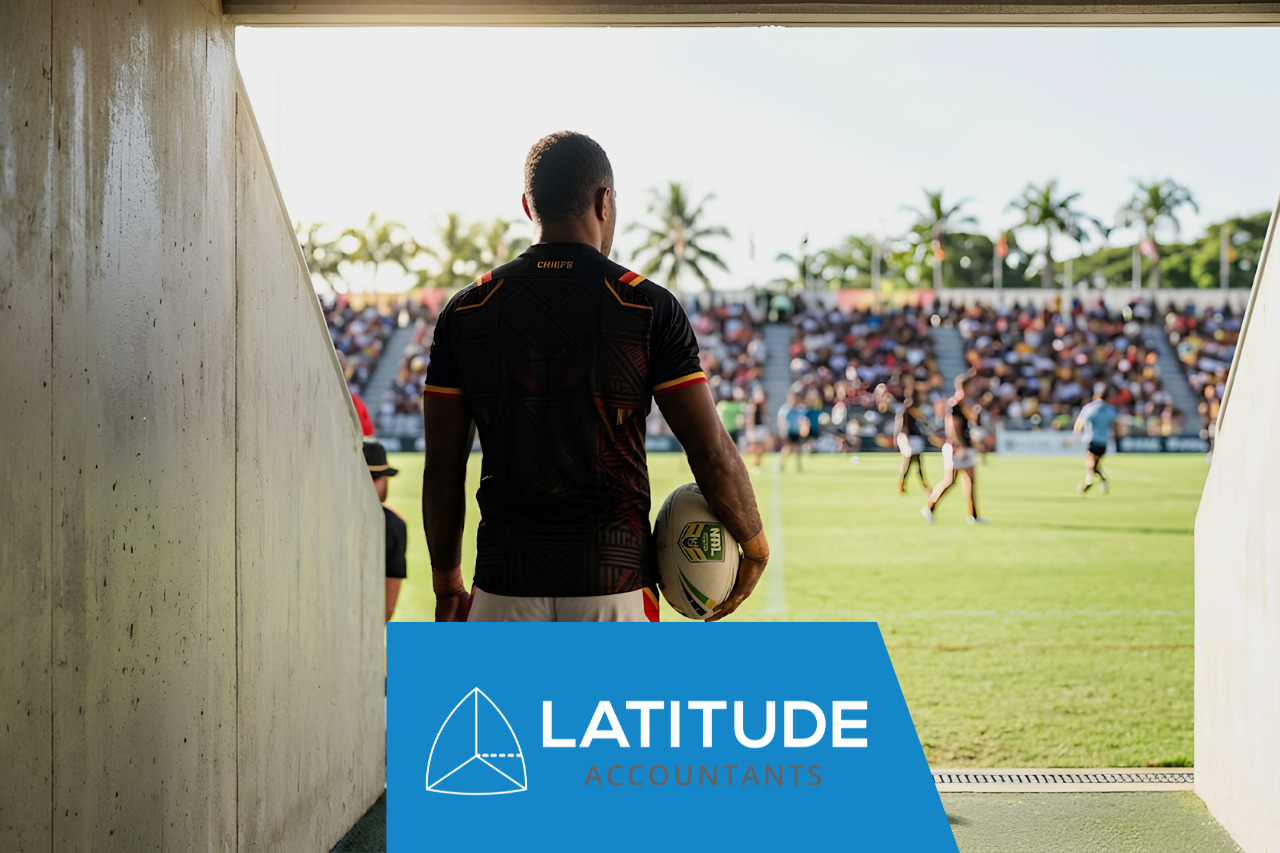
The Australian tax treatment of players joining the PNG Chiefs has now changed significantly.
Earlier discussion around the proposed Papua New Guinea based NRL franchise focused heavily on whether Australian players could genuinely receive tax free income while playing overseas.
That question is no longer theoretical.
The Australian Parliament has now passed specific legislation providing an Australian income tax exemption for qualifying income derived from employment with PNG Chiefs Limited.
The exemption is contained in the Treasury Laws Amendment (Tax Reform No. 2) Act 2026, which is now in force.
So what does the new law actually do, who does it apply to, and does it really mean PNG Chiefs players can earn their salaries tax free?
What Changed?
Under the ordinary Australian tax rules, an Australian resident for tax purposes is generally taxed on their worldwide income.
That means simply moving overseas to work does not normally make foreign employment income exempt from Australian tax.
This was one of the major questions surrounding the proposed PNG Chiefs franchise.
However, the Federal Government has now created a specific exemption for income connected with employment by PNG Chiefs Limited.
The legislation inserts a new section 51 130 into the Income Tax Assessment Act 1997 specifically dealing with PNG Chiefs Limited employment.
This is not a general change to Australia’s foreign income rules.
It is a targeted exemption created specifically for employment with PNG Chiefs Limited.

What Income Is Exempt?
The legislation states that qualifying ordinary income and statutory income received from PNG Chiefs Limited in respect of employment, or former employment, can be exempt from Australian income tax.
Importantly, the legislation is deliberately broad about the type of remuneration that may qualify.
It specifically contemplates amounts including:
- salary and wages
• match fees
• allowances
• bonuses
• benefits
• other forms of remuneration
For an eligible player or employee, that means the exemption potentially extends well beyond their standard weekly salary.
Does This Mean PNG Chiefs Players Pay No Australian Tax?
Potentially on qualifying PNG Chiefs employment income, yes.
That is the major difference between the new law and the ordinary tax treatment of Australians working overseas.
Under the usual rules, remaining an Australian tax resident generally means continuing to pay Australian tax on worldwide income.
The new provision creates a specific exemption from that rule for qualifying PNG Chiefs Limited employment income.
However, it is important not to take that further than the legislation actually goes.
The exemption does not mean every source of income earned by a player automatically becomes tax free.
For example, other income may still need to be considered separately, including:
- investment income
• rental income
• business income
• income from unrelated sponsorship arrangements
• income earned from entities other than PNG Chiefs Limited
• capital gains
The exemption is tied specifically to qualifying income from PNG Chiefs Limited in respect of employment.
Do Players Need to Become Non Residents of Australia?
This is one of the most important parts of the change.
Previously, much of the discussion around a potential tax advantage centred on whether a player could cease being an Australian resident for tax purposes.
That is no longer necessarily required to access this particular exemption.
Section 51 130 operates as a specific exemption for qualifying PNG Chiefs employment income.
That means an individual may potentially remain an Australian resident for tax purposes while still receiving qualifying PNG Chiefs employment income that is exempt from Australian income tax.
Their tax residency still matters for their other income and their broader tax position.
But residency is no longer the only question when considering the taxation of their PNG Chiefs salary.
How Long Does the Exemption Last?
The exemption applies to qualifying income included in a person’s income for the 2025 to 2026 income year and the following nine income years.
That gives the measure a defined period rather than creating a permanent exemption for professional athletes generally.
It is specifically linked to the establishment and operation of PNG Chiefs Limited.
Is This a Tax Exemption for All NRL Players?
No.
This is not an exemption available to every NRL player who decides to play overseas.
It is not a general professional athlete exemption.
It is not a general exemption for Australians working in Papua New Guinea.
The legislation specifically identifies PNG Chiefs Limited, including the particular company incorporated in Papua New Guinea.
That distinction is extremely important.
A player signing for another overseas sporting organisation would need to consider the normal Australian residency, foreign income and treaty rules.
What About Sponsorship Income?
This is where the details become particularly important.
The legislation is focused on income received from PNG Chiefs Limited in respect of employment.
A sponsorship payment coming directly from PNG Chiefs Limited as part of a player’s employment package may potentially fall within the exemption depending on the arrangement.
A separate sponsorship agreement with an unrelated Australian or international company is a different issue.
Simply being employed by the PNG Chiefs does not automatically make all of a player’s commercial income exempt.
The contractual structure and source of the payment still matter.
What About Property and Investments in Australia?
The exemption does not remove a player’s other Australian tax obligations.
A player who remains an Australian resident for tax purposes may still have Australian tax obligations in relation to matters such as:
- rental income
• dividends
• interest
• capital gains
• business income
• trusts and companies
• other Australian and overseas investments
The exemption relates to qualifying PNG Chiefs employment income, rather than converting the individual into a generally tax exempt taxpayer.
What About Playing Games in Australia?
This is another area where players should avoid assuming the answer based purely on where a match takes place.
The new legislation specifically exempts qualifying remuneration from PNG Chiefs Limited in respect of employment.
That means the analysis is different from the normal situation where an overseas athlete performs sporting activities in Australia and treaty rules may determine whether Australia has taxing rights.
The exact treatment will depend on the payment, employment arrangement, legislation and any other relevant tax provisions.
Players with appearance fees, separate promotional contracts or income from another entity should obtain advice on those amounts separately.
Why Did the Government Create the Exemption?
The measure forms part of legislation supporting the establishment of the PNG based NRL franchise.
When the Bill was introduced on 25 June 2026, Parliament described the measure as providing an income tax exemption for income derived in respect of employment with PNG Chiefs Limited.
It is therefore a deliberately targeted tax measure rather than a change to the general Australian tax treatment of foreign employment.
The legislation ultimately became the Treasury Laws Amendment (Tax Reform No. 2) Act 2026, with the Federal Register recording the Act as in force from August 2026.
Was the Previous Tax Commentary Wrong?
Not necessarily.
Before this specific exemption existed, the ordinary Australian tax rules remained highly relevant.
An Australian tax resident working overseas would generally continue to be taxed on worldwide income unless another exemption applied.
The new legislation changed that position specifically for qualifying PNG Chiefs Limited employment income.
This is a useful example of why tax commentary needs to be read in the context of the law that existed when it was published.
Tax legislation can change quickly, particularly where governments introduce measures for a specific industry, project or policy objective.
Simple Example
Imagine an Australian NRL player signs an employment contract directly with PNG Chiefs Limited.
They receive:
$800,000 salary from PNG Chiefs Limited
That amount may qualify for the specific exemption under section 51 130.
The same player also receives:
$100,000 from an unrelated Australian sponsor
That separate sponsorship payment does not automatically become exempt simply because the player works for the PNG Chiefs.
They also own:
An investment property in Sydney earning rental income
That rental income remains a separate tax issue.
This is why saying a player is simply “tax free” can be misleading.
The better description is that qualifying PNG Chiefs employment income receives a specific Australian income tax exemption.

Frequently Asked Questions
Is the PNG Chiefs tax exemption now law?
Yes.
The exemption was enacted through the Treasury Laws Amendment (Tax Reform No. 2) Act 2026 and is now in force.
What section of the tax law contains the exemption?
The legislation inserts section 51 130 into the Income Tax Assessment Act 1997.
Can an Australian resident receive the exemption?
Potentially, yes.
The legislation creates a specific exemption for qualifying income rather than requiring the individual to first cease Australian tax residency.
Residency can still affect their other income.
What types of income can be exempt?
The legislation includes qualifying salary, wages, match fees, allowances, bonuses, benefits and other remuneration received from PNG Chiefs Limited in respect of employment.
Does the exemption apply to sponsorship income?
Not automatically.
It depends on who pays the amount, why it is paid and whether it is properly characterised as income from PNG Chiefs Limited in respect of employment.
Is all of a player’s income tax free?
No.
Other income remains subject to the ordinary tax rules unless another exemption applies.
Does this apply to other athletes playing overseas?
No.
The exemption specifically relates to employment with PNG Chiefs Limited.
How long does the exemption apply?
It applies from the 2025 to 2026 income year and for the following nine income years.
The Bottom Line
The PNG Chiefs tax exemption is no longer just a proposal.
It is now Australian law.
For qualifying employees of PNG Chiefs Limited, including potentially players and staff, certain income received in respect of that employment can be exempt from Australian income tax even where the individual would otherwise be subject to Australia’s normal tax rules.
But that does not mean every dollar the person earns becomes tax free.
The exemption is specific to qualifying PNG Chiefs Limited employment income.
Other sponsorships, investments, property income, businesses and financial arrangements still need to be considered separately.
For players considering a PNG Chiefs contract, the important question is no longer simply:
“Will I still be an Australian tax resident?”
The better questions are:
What income is being paid by PNG Chiefs Limited?
What sits inside the employment arrangement?
What income sits outside it?
And how will the rest of the player’s financial position be taxed?
Those details can materially change the outcome.

Speak With Latitude Accountants
International income, tax residency and professional sporting contracts can involve multiple Australian and overseas tax issues.
If you are an athlete, agent, business owner or professional dealing with cross border income, Latitude Accountants can help you understand how the current law applies to your circumstances.
Contact our team before making decisions based solely on headlines about “tax free” income.
📍 Sydney Olympic Park | Marrickville | Melbourne | Loxton | Adelaide
📞 1300 706 597
📧 info@latitudeaccountants.com.au
Disclaimer
This article is provided for general information and educational purposes only. It does not constitute financial, tax, accounting, legal, investment or business advice.
Tax laws and their application depend on individual circumstances, contractual arrangements and the legislation in force at the relevant time. While reasonable care is taken in preparing our content, you should obtain professional advice relevant to your circumstances before making financial, tax or investment decisions.
Free Consultation
Got questions after reading this?
Book a call with our team. We'll walk through your situation and help you understand your options — no obligation.
Book Your Free Consultation*Free for all ABN holders · Limited spots available
Call 1300 706 597What We Do
Chartered accountants who work proactively
Not just at tax time — all year round.
Before You Make a Move
Six times you should call us first
Most costly mistakes happen before the paperwork is signed.
Buying a vehicle
Structure, FBT, and depreciation all need to be right before you sign.
Taking money out
Wages, dividends, or drawings each carry different tax consequences.
Buying property
Who buys it changes your GST, land tax, and CGT position entirely.
Hiring your first employee
Payroll, super, and STP obligations kick in from day one.
Buying or selling a business
You can inherit someone else's tax debt. Know what you're buying first.
Taking on a partner
Equity splits need proper structure upfront. A handshake deal costs more to unwind.
Get In Touch
Stop Guessing. Start Making Better Decisions.
Get clarity on your numbers, your structure, and your next move. Speak directly with our team and walk away knowing exactly where you stand.